Routes · 14 min read
The Car-Free Alpine Passes Worth Planning a Trip Around
Some of the best climbs in the Alps have no cars on them. A few are car-free every day of the year. Others close their gates to traffic for one glorious morning each summer. Here is where to find them, and how to get to every single one by train.
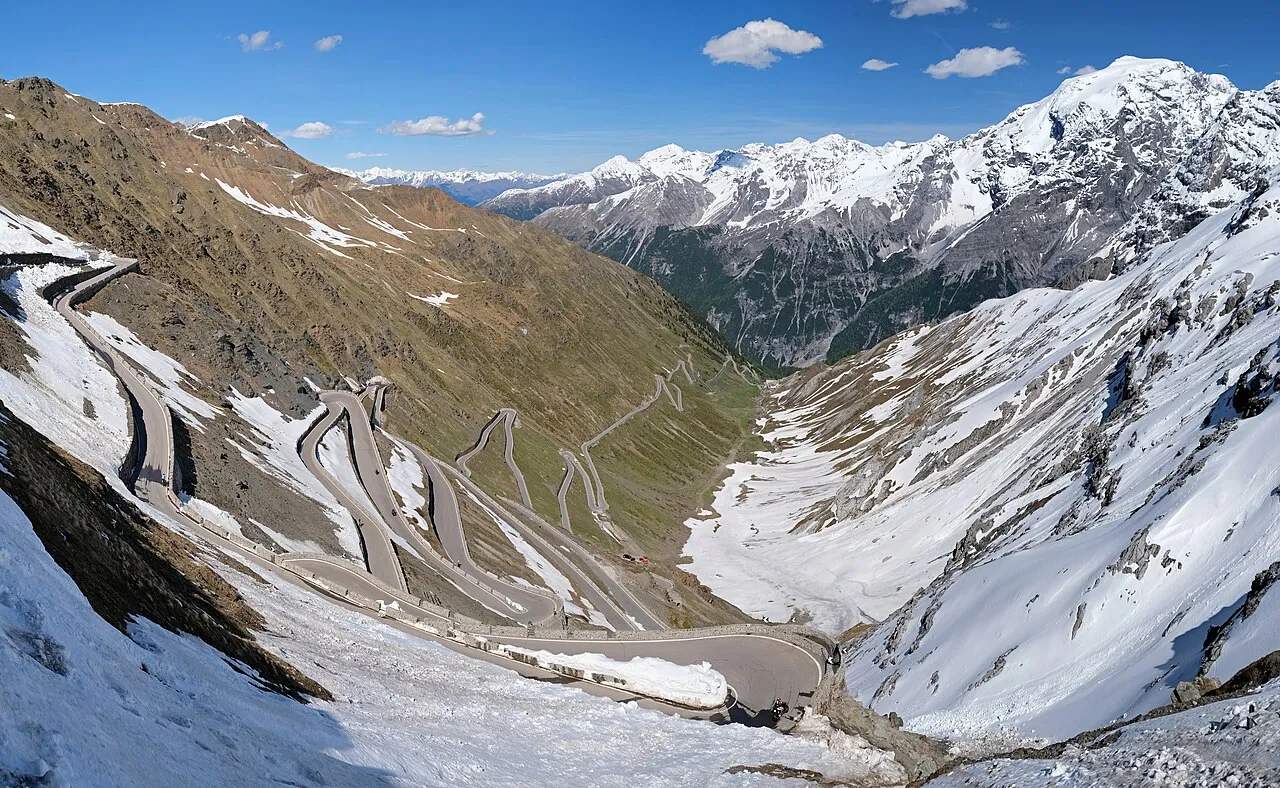
There is a particular kind of quiet you only get on a mountain road with no engines on it. No wing mirror clipping past your elbow, no diesel haze hanging in the switchbacks, no bracing for the next car on a blind hairpin. Just your own breathing, the click of the freehub, and the pass slowly coming to you.
That feeling is rarer than it should be. Most alpine passes are shared with traffic, and on a hot weekend in August that can mean a near constant stream of it. But there are exceptions. Some roads have been closed to cars for years and simply stay that way. Others shut their gates to engines for a single day each summer and hand the whole mountain to people on bikes. Both are worth building a trip around.
What follows are the best of them across Switzerland, Italy, France and Austria. And because this is Pedal Peak, one rule runs through the whole list: you do not need a car to ride a car-free pass. Every climb here is reachable by train, often with your bike rolling straight onto the carriage. Pack a transport bag, book the seat, and let someone else do the driving to the bottom of the climb.
Roads where the cars never come
Start here. These are car-free not for a day but as a way of life. No event calendar, no booking window. Just show up and climb.
Grosse Scheidegg, Switzerland
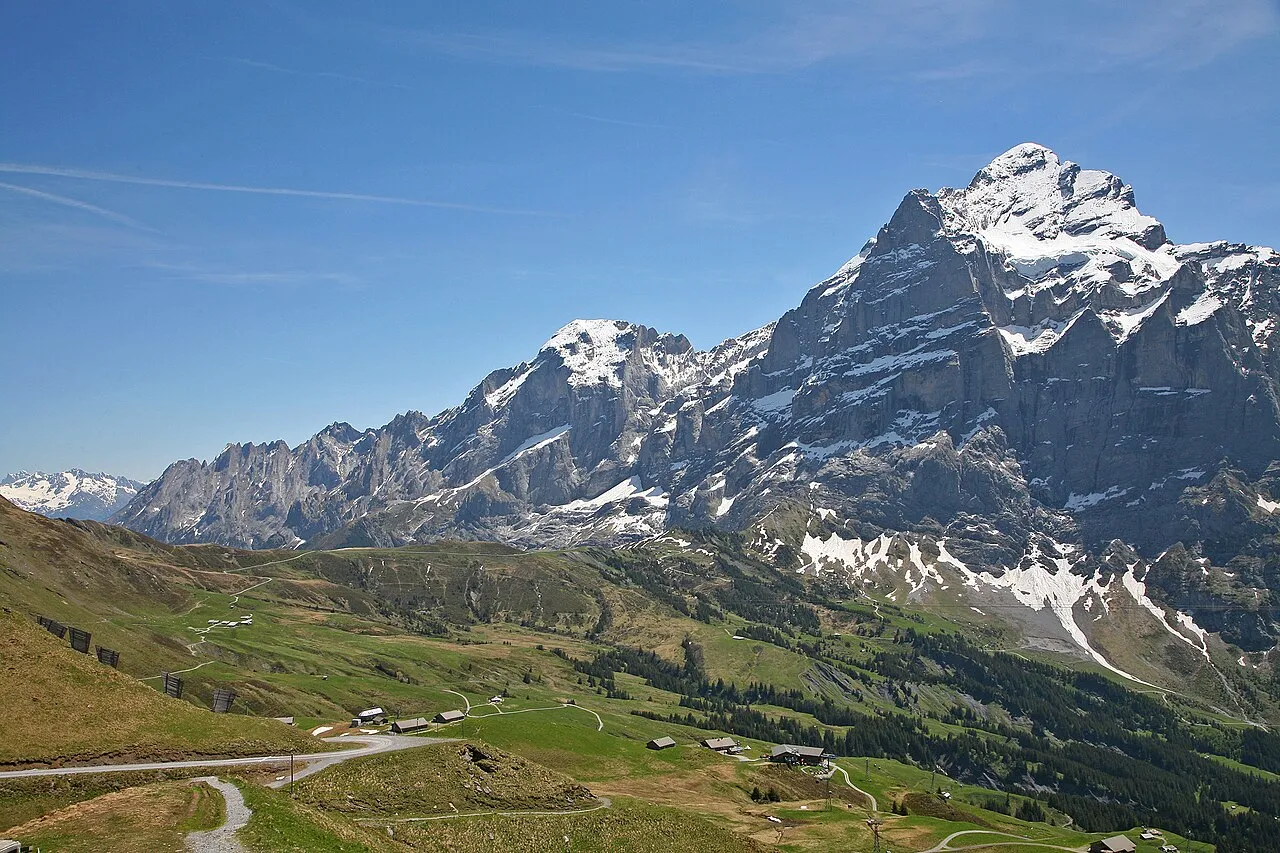
Photo: W. Bulach, CC BY-SA 4.0, via Wikimedia Commons
- Where
- Bernese Oberland
- Car-free
- Permanent. The only engines are the yellow PostBuses
- Get there
- Train to Grindelwald or Meiringen
If you only ride one car-free pass in your life, make it this one. The road from Grindelwald to Meiringen over the Grosse Scheidegg has been closed to private cars for decades. The only engines you meet are the yellow PostBuses, and the etiquette is simple: hear the three-tone horn, ease to the side, wave. In return you get sixteen kilometres of climbing under the north face of the Eiger and the Wetterhorn, on tarmac that belongs to you and the cows. Take the train to Grindelwald, ride over the top, and roll down into Meiringen for the train home.
Täsch to Zermatt, Switzerland
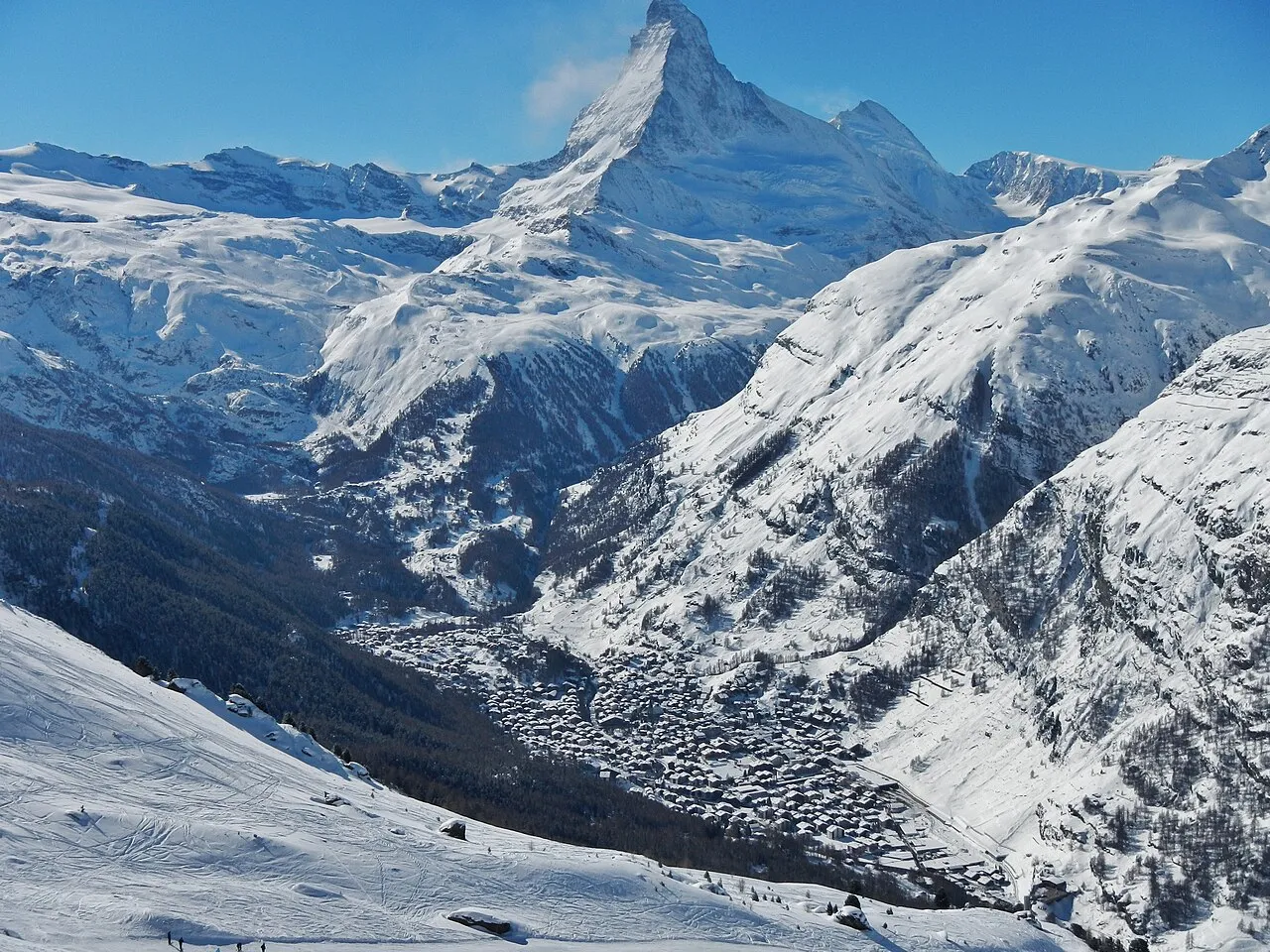
Photo: qwesy qwesy, CC BY 3.0, via Wikimedia Commons
- Where
- Mattertal, Valais
- Car-free
- Permanent. Cars stop at the terminal in Täsch
- Get there
- Train to Täsch, ride the last six kilometres up
Zermatt has banned private cars since the 1960s, and the spell starts before the village. Cars stop at the terminal in Täsch, which means the final valley road and the village itself belong to bikes, electric taxis and the occasional horse cart, all of it under the Matterhorn. This is gentle riding rather than a brutal climb, the kind of car-free you bring people to when you want to show them why you bother. The Matterhorn Gotthard Bahn drops you in Täsch and the rest is yours.
Via Tremola, old Gotthard, Switzerland
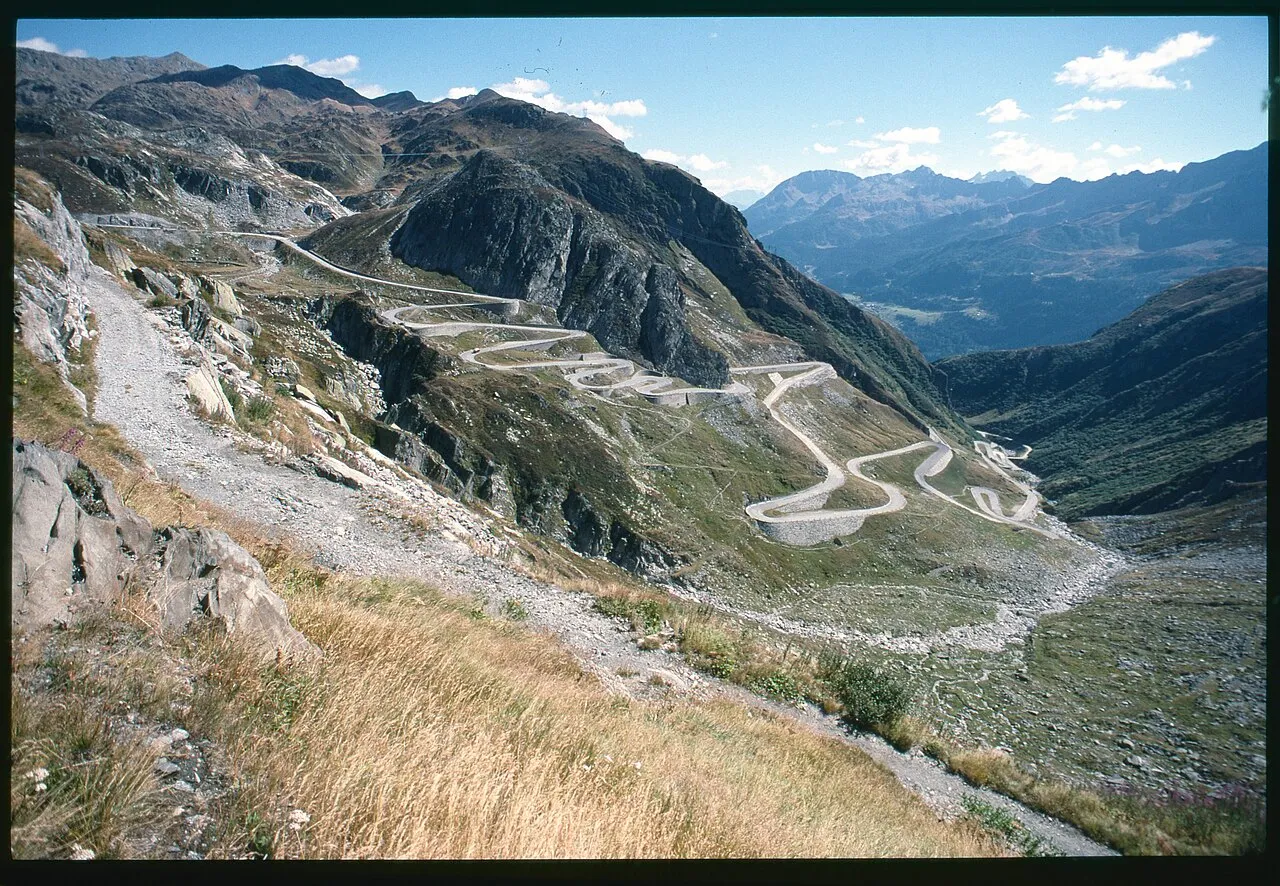
Photo: Andre Corboz, CC BY-SA 4.0, via Wikimedia Commons
- Where
- Airolo, Ticino
- Car-free
- Effectively. Through traffic uses the tunnel and the new road
- Get there
- Train to Airolo on the Gotthard line
Not officially closed, but you would hardly know it. When the Gotthard tunnel and the modern pass road swallowed the through traffic, they left the old Tremola behind: more than seven kilometres of original cobblestones stacked in tight hairpins above Airolo, the longest road monument in Switzerland. It is loud under the tyres and quiet everywhere else. Bring slightly wider rubber and a sense of occasion. The train to Airolo puts you at the foot of it.
Col de la Loze, France
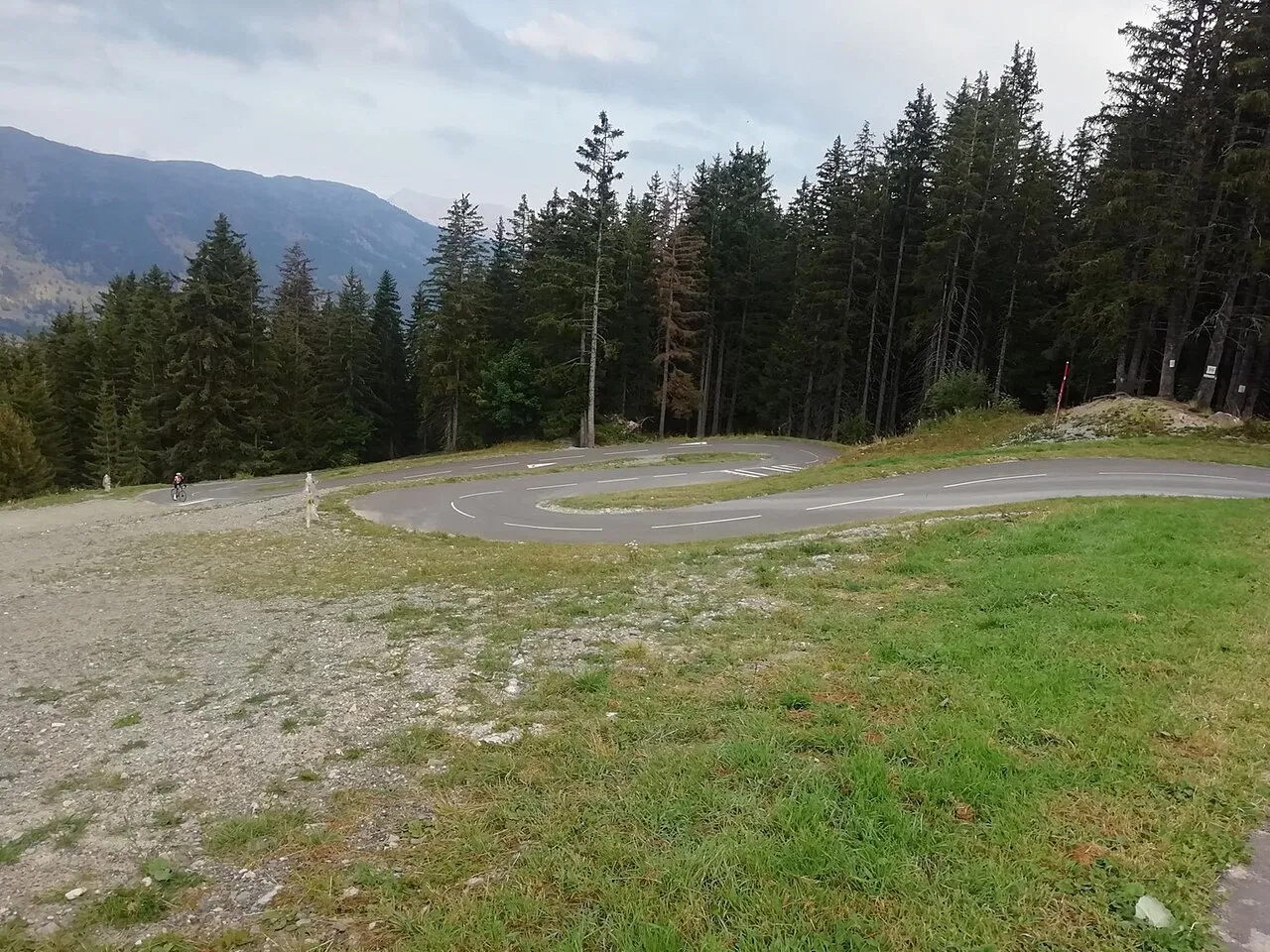
Photo: Wompratte, CC BY-SA 4.0, via Wikimedia Commons
- Where
- Savoie, between Courchevel and Méribel
- Car-free
- Permanent. A purpose-built cycle path, barred to cars
- Get there
- Train to Moûtiers, climb via Méribel or Courchevel
The newest entry on this list and the strangest. The top of the Col de la Loze is not a road at all but a paved cycle path, built for bikes and permanently closed to cars. The Tour de France has finished here three times, and the upper ramps are savage, lurching to twenty-four percent with almost no warning. The reward is a summit you share with nobody in a car, ever. Take the TGV to Moûtiers and climb up through Méribel or Courchevel to reach it.
Passes that close for a day
These you have to time. Once or twice a summer, some of the most famous passes in the Alps lock their gates to traffic and turn the whole climb into a moving festival of bikes. Mark the date, book the train early, and ride a giant in total silence.
Stelvio Bike Day, Italy
Photo: kallerna, CC BY-SA 4.0, via Wikimedia Commons
- Where
- South Tyrol and Lombardy
- Car-free
- Saturday 29 August 2026, 8am to 4pm, all three approaches
- Get there
- Vinschgau railway to Mals, BikeLiner bus to Spondinig
Forty-eight numbered hairpins, 2,758 metres, the second-highest paved pass in the Alps. On a normal summer day the Stelvio is a circus of motorbikes and camper vans. For one Saturday at the end of August, all three approaches close to engines and the whole mountain goes quiet. If you only do one car-free day in Europe, do this one. Take the Vinschgau valley railway to Mals, hop the bike-friendly BikeLiner bus to Spondinig, and climb the Prato side switchback by switchback.
Sellaronda Bike Day, Italy
Passo Pordoi. Photo: Bops92, CC BY-SA 4.0, via Wikimedia Commons
- Where
- The Dolomites
- Car-free
- Saturday 6 June and Saturday 12 September 2026, 8.30am to 4pm
- Get there
- Train to Bolzano or Bressanone, SAD bus up to Val Gardena
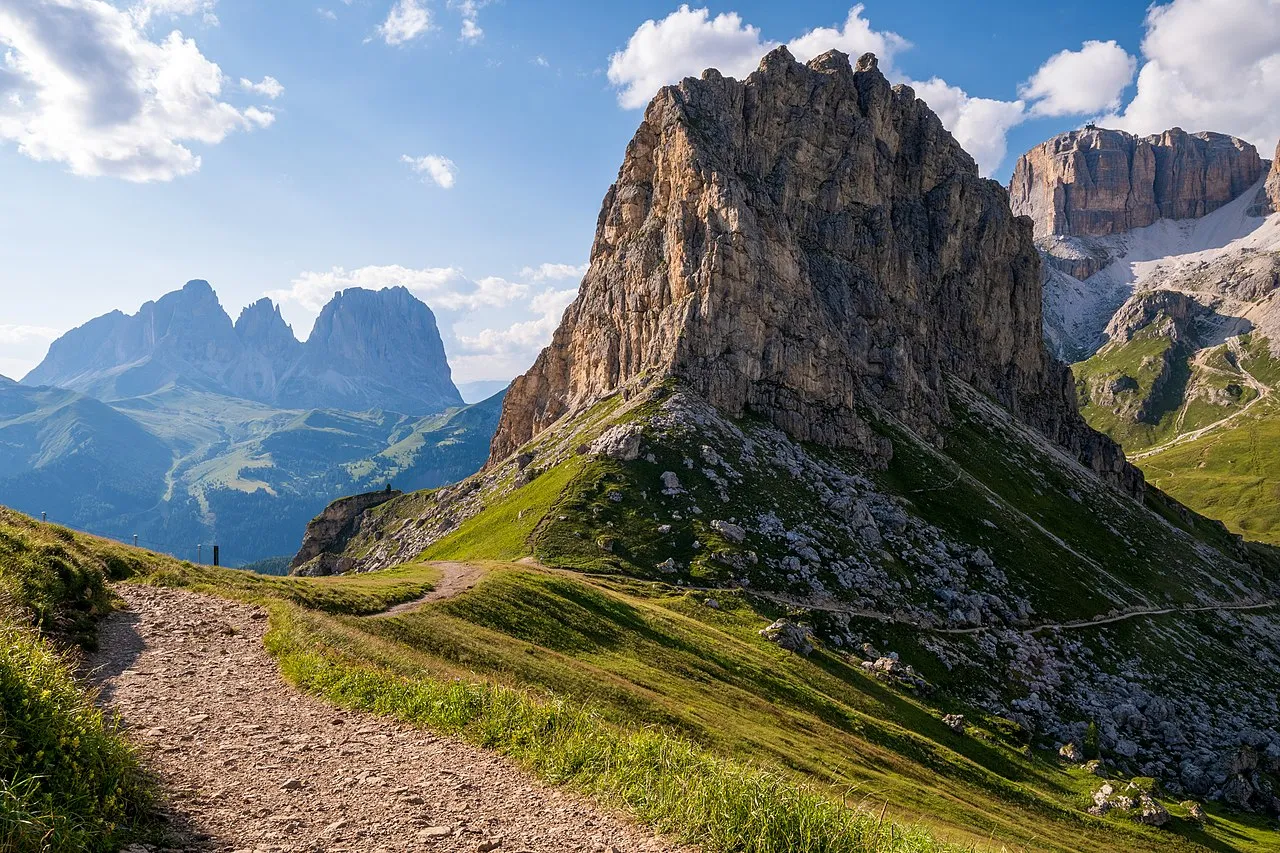
Four Dolomite passes in one loop, all closed at once. Sella, Pordoi, Gardena and Campolongo link into a fifty-three kilometre ring with no flat metre in it and around 1,600 metres of climbing, ringed the whole way by the pale towers the Dolomites are famous for. It runs twice a year, once in June and once in September, and thousands ride it without a single car in sight. The Brenner railway gets you to Bolzano or Bressanone, then a SAD bus carries you and the bike up into Val Gardena to start.
Ride the Alps, Switzerland
Valais. Photo: Zairon, CC BY-SA 4.0, via Wikimedia Commons
- Where
- Valais
- Car-free
- Several Saturdays, May to September 2026
- Get there
- SBB to Visp, Sion, Sierre or Le Chable
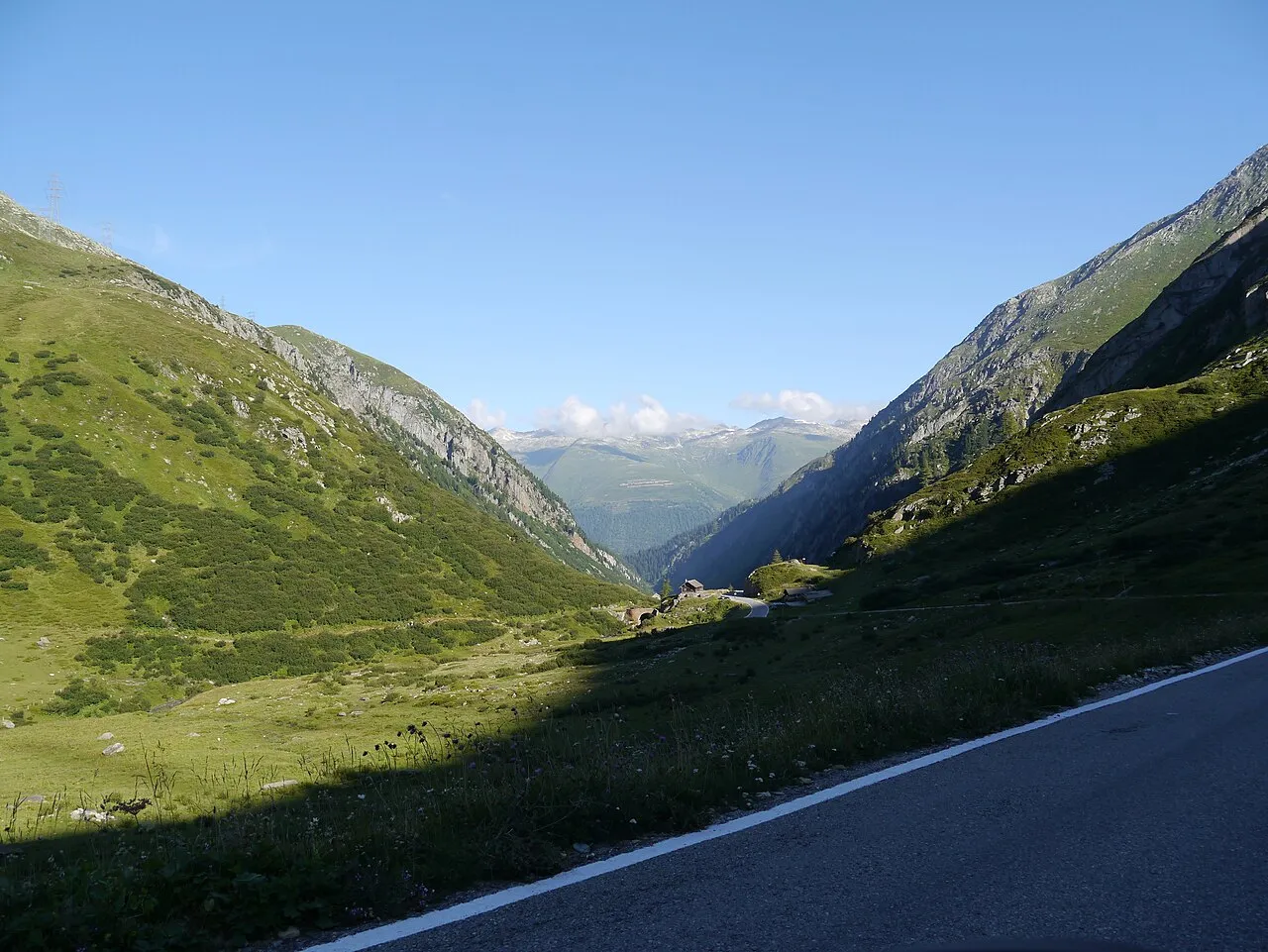
Switzerland's own answer to the Bike Day, run across a string of Valais climbs through the summer. Each event closes one mountain road completely: Moosalp in May, then Sanetsch, Moiry and Tseuzier across late June, and Mauvoisin to round things off in September. These are proper climbs, 1,200 to 1,800 metres of vertical, on roads emptied of everything but cyclists and feed stations. Every start town sits on the rail network, Visp and Sion and Sierre and Le Chable, so the whole day works without a car. Confirm the year's dates on the Ride the Alps site before you book, as they move around.
Albula Pass, Switzerland
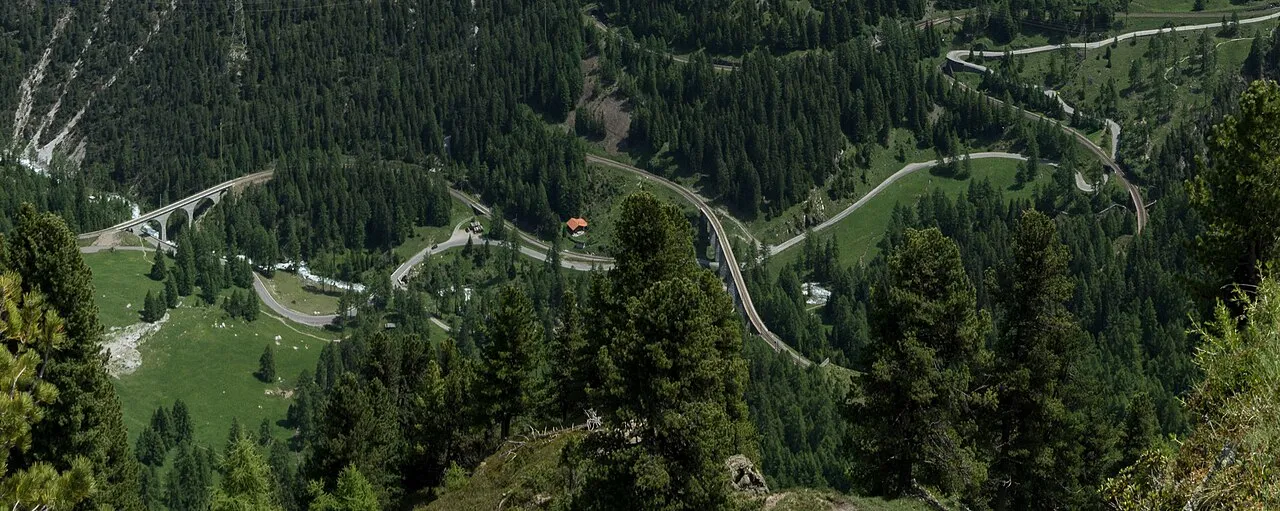
Photo: Martingarten, CC BY-SA 4.0, via Wikimedia Commons
- Where
- Graubünden
- Car-free
- Sunday 6 September 2026, 10am to 4pm (slowUp Mountain Albula)
- Get there
- Rhaetian Railway to Bergün
The Albula is a UNESCO-listed masterpiece even before you remove the cars, the railway looping under itself through spiral tunnels and stone viaducts as the road climbs alongside. On the first Sunday of September the pass closes to traffic for slowUp Mountain Albula and you climb roughly thirty kilometres of it in peace, the little red Rhaetian Railway trains sliding past on their viaducts above you. Take that same railway to Bergün to start. It is the most photogenic warm-up to a climb in the country.
Klausenpass, Switzerland
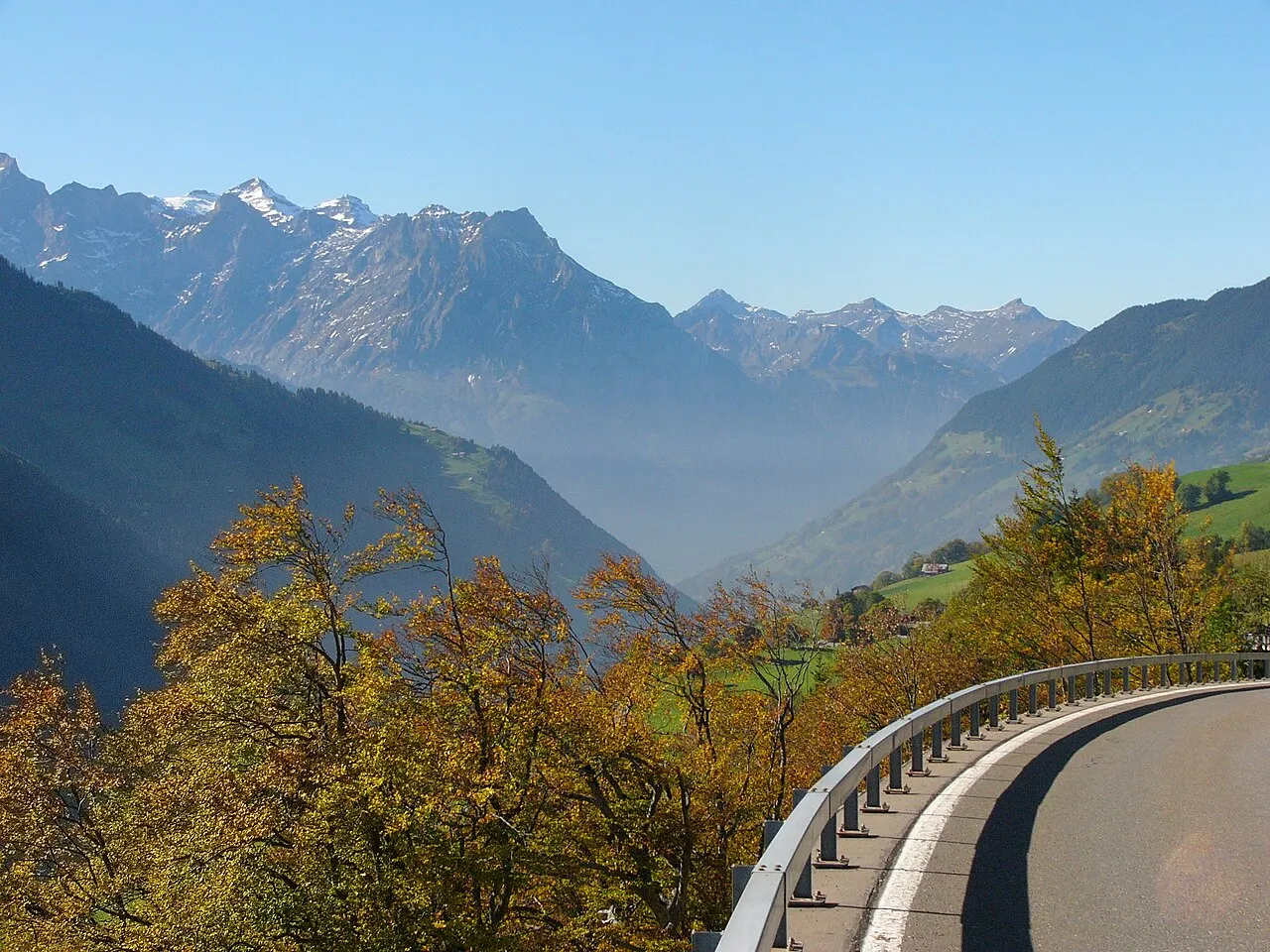
Photo: Nikater, public domain, via Wikimedia Commons
- Where
- Glarus and Uri
- Car-free
- Sunday 13 September 2026, 10am to 4pm (Klausen Monument)
- Get there
- Train to Linthal
The last car-free pass of the Swiss season, and a fitting send-off. In mid-September the whole Klausenpass closes for the Klausen Monument and you ride twenty-two kilometres of historic switchbacks up to nearly 1,950 metres, with refreshment stands along the way and the road entirely your own. It is free, you just turn up. The Glarner Sprinter runs to Linthal at the foot of the north side, which makes it one of the easiest big climbs in the country to reach without a car.
Col du Galibier, France
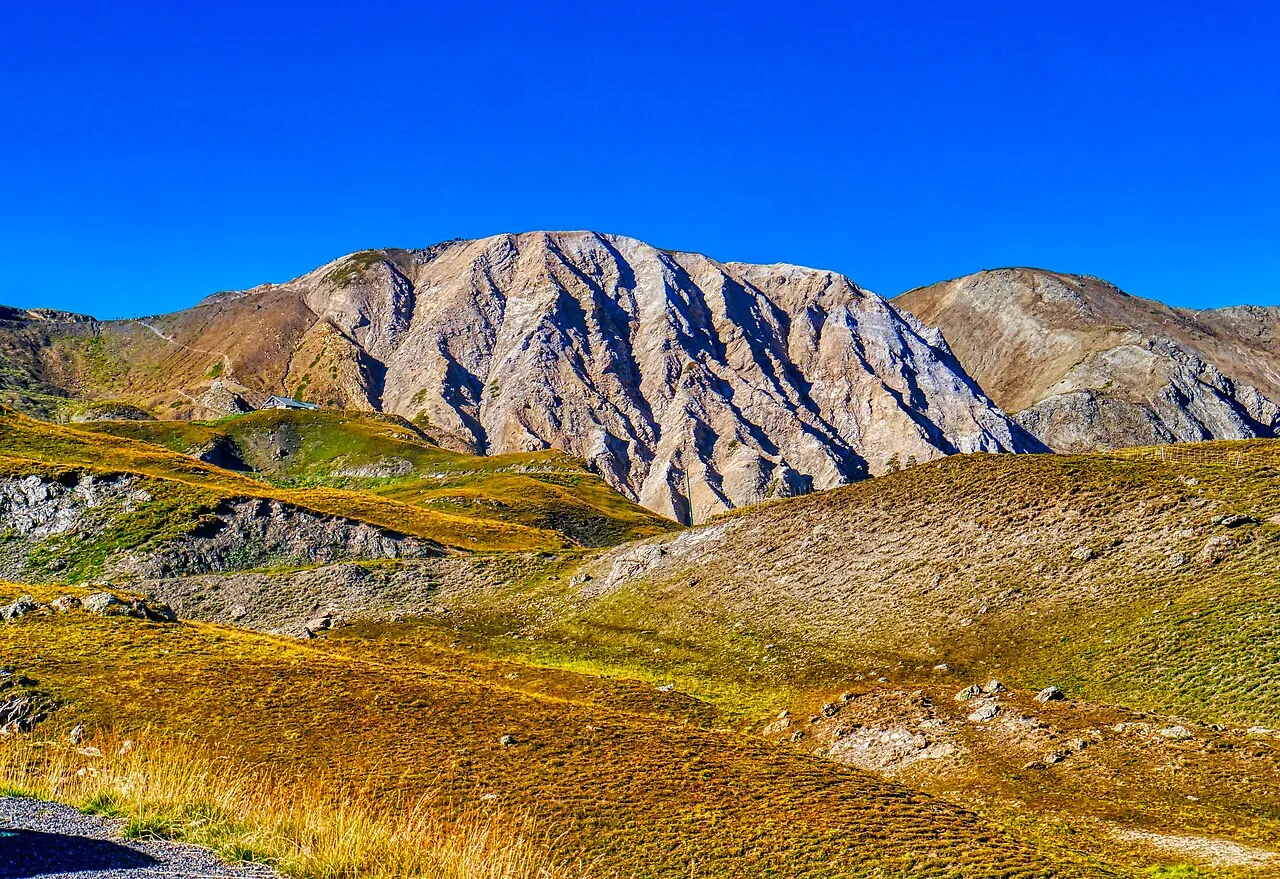
Photo: Zairon, CC BY-SA 4.0, via Wikimedia Commons
- Where
- Savoie and Hautes-Alpes
- Car-free
- Several mornings, late June to early August 2026, 9am to noon
- Get there
- Train to Saint-Jean-de-Maurienne or Briançon
France runs the most generous car-free programme in the Alps, dozens of cols closed to traffic for a morning across the summer, and the Galibier is the jewel. At 2,642 metres it is one of the Tour's mythical giants, a barren moonscape above 2,000 metres where the air thins and the road keeps tilting up. On its reserved mornings, usually a few across late June, July and early August, you get the whole thing to yourself from nine until noon. Saint-Jean-de-Maurienne on the TGV line is your gateway to the north side, and Briançon serves the south.
Col d'Izoard, France
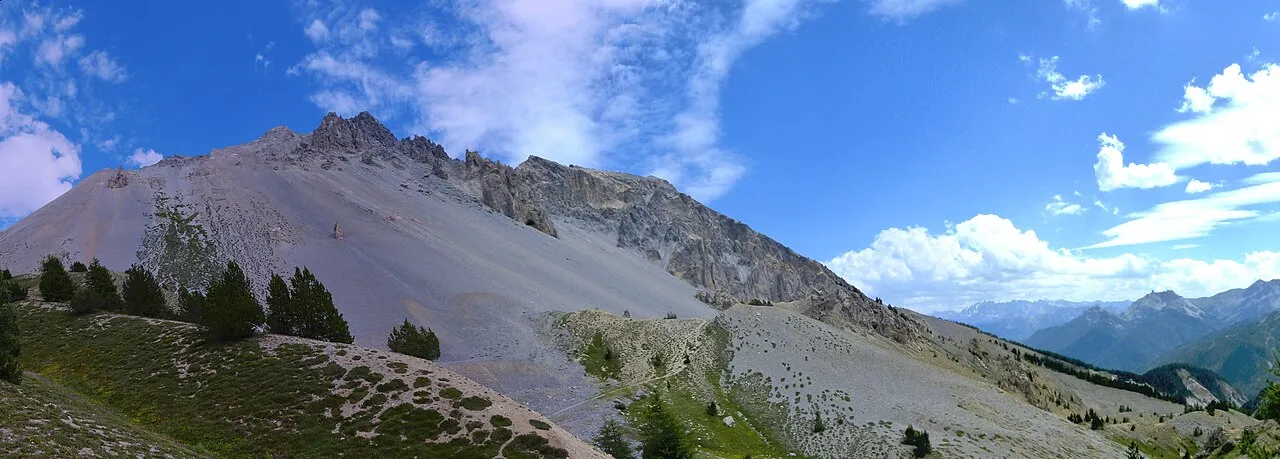
The Casse Déserte. Photo: Marc Mongenet, CC BY-SA 4.0, via Wikimedia Commons
- Where
- Hautes-Alpes
- Car-free
- Thursday 2 July and Thursday 6 August 2026, mornings
- Get there
- Train to Briançon
If the Galibier is the giant, the Izoard is the one you will photograph. Its south side runs through the Casse Déserte, a lunar field of pale scree and broken rock pinnacles that looks like nowhere else in the Alps. Twice in 2026 the col is reserved for cyclists for the morning, on the 2nd of July and the 6th of August. Briançon, itself the highest town in France, sits at the bottom and is reachable by train, sleeper included from Paris if you want to wake up at the foot of the climb.
Col de l'Iseran, France
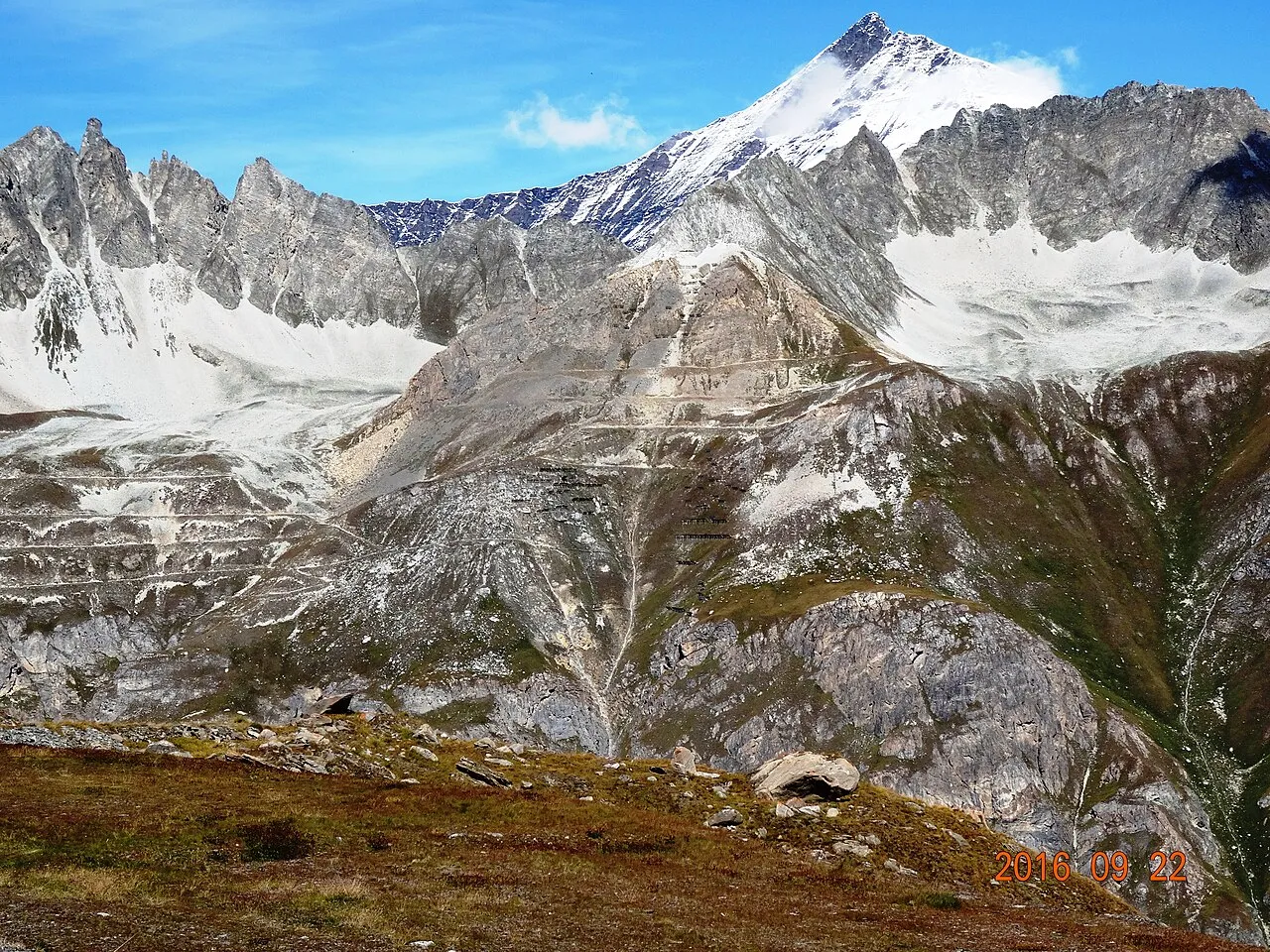
Photo: Franzrycou, CC BY-SA 4.0, via Wikimedia Commons
- Where
- Savoie
- Car-free
- Sunday 21 June 2026, 8am to 1pm, both sides closed
- Get there
- Train to Bourg-Saint-Maurice or Modane
The highest paved pass in the Alps at 2,770 metres, and one of the few that closes both sides at once. On the longest weekend of the year the Iseran is reserved for cyclists from eight until one, both the Val d'Isere and the Bonneval approaches, so you can climb one side and descend the other without ever meeting a car. The high section is genuinely alpine, with snow patches lingering in June and a thin, cold summit even in midsummer. Bourg-Saint-Maurice on the TGV line is the closest railhead, with Modane serving the southern end.
Grossglockner, Austria
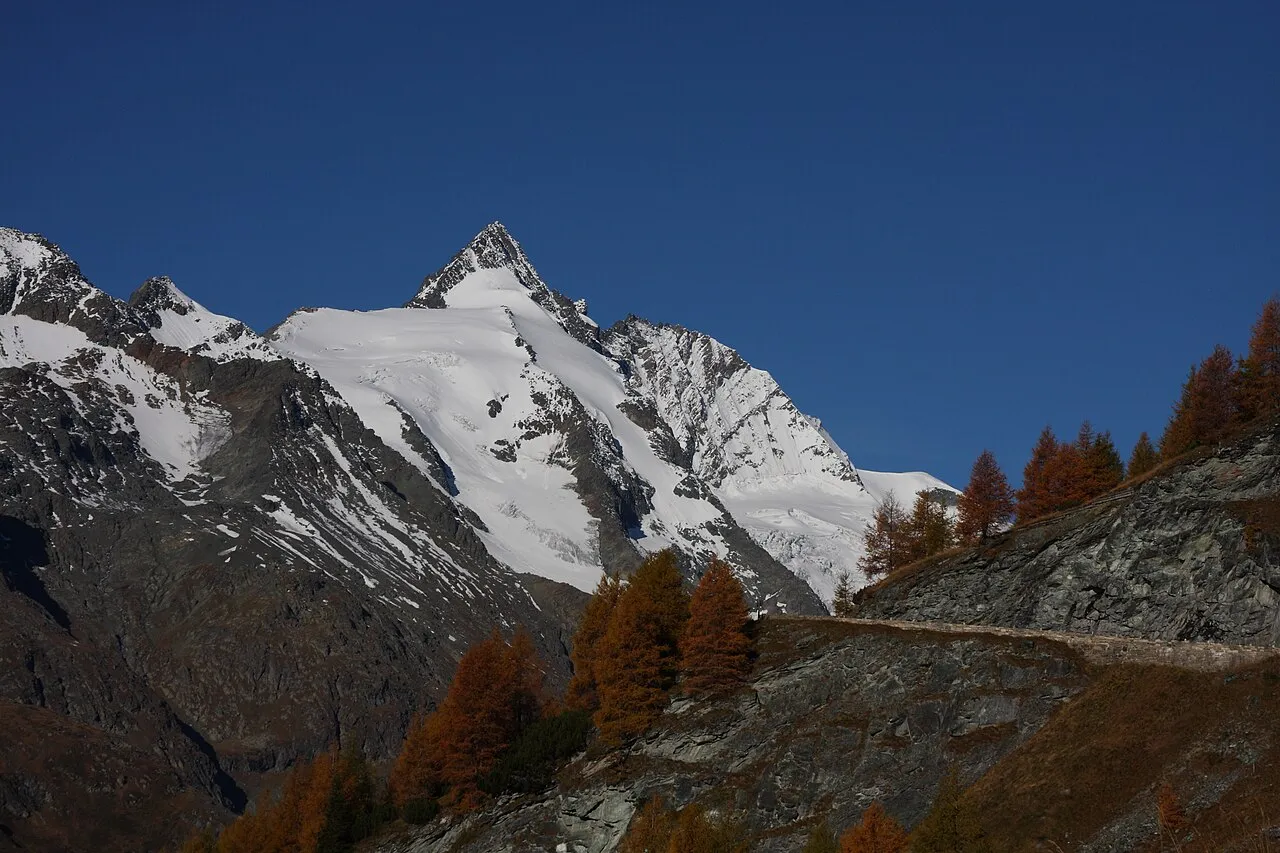
Photo: Ewald Gabardi, CC BY-SA 3.0, via Wikimedia Commons
- Where
- Carinthia and Salzburg
- Car-free
- Sunday 7 June 2026, 7am to 10.30am, north side (Glocknerkönig event)
- Get there
- Train to Zell am See
Austria does not really do the open car-free day the way Italy and France do, with one exception worth the trip. For the Glocknerkönig each June, the north ramp of the Grossglockner Hochalpenstrasse from Bruck closes to traffic for a few early-morning hours and the field climbs nearly 1,700 metres toward the glaciers and the country's highest peak. It is a registered event rather than a turn-up-and-ride day, so you need a number, but few roads in the Alps are this grand without engines on them. Zell am See on the main line is the access town.
And more mornings worth chasing
The list above is the highlight reel, not the whole calendar. If you are building a summer around empty passes, these close to cars too, and most slot easily into a trip already pointed at one of the climbs above.
- France, cols réservés (mornings, usually 9am to noon). Col Agnel (3 July and 6 September), Col du Granon (30 June, 15 July and 12 August), Mont-Cenis (22 July), Col de l'Echelle (1 July), Plateau des Glières (30 June) and Col du Petit-Saint-Bernard in early September. The Col de la Madeleine usually runs a reserved morning too, though its 2026 date was not fixed at the time of writing.
- Italy, Valtellina (free, no registration). Passo Gavia (5 June and 30 August), the brutal Mortirolo (9 June and 28 August) and the Cancano lakes road on several days through the summer, all part of the Enjoy Stelvio Valtellina programme.
- Switzerland, Freipass Graubünden. The Lukmanier (7 June) and the Splügen (28 June) are each handed over to non-motorised traffic for the day, both easy to reach by Rhaetian Railway and PostBus.
Before you go
A few things I have learned planning these trips. Confirm the date first. Car-free days move from year to year and the odd one gets cancelled for weather or roadworks, so check the organiser's own page before you book anything.
Book trains early, especially for the Italian and French events, where the good connections fill up fast. And bring a bike bag. SBB and most alpine railways will carry your bike, but a foldable transport bag keeps you legal on the trains that need the bike covered and turns any station into the start of a ride.
The whole point of a car-free pass is the silence. It feels even better when you got there without a car too.
All dates are for the 2026 season and were correct at the time of writing. Several are marked subject to change by their organisers, so always reconfirm before booking travel. Photos are from Wikimedia Commons under the licences noted beside each image.